Banking Redundancy: Why Every International Business Needs a Backup Banking Strategy
Protect Your Business from Banking Disruptions with a More Resilient Financial Setup
Business Banking
8 min read
International businesses rely on uninterrupted banking services to keep operations running smoothly. Whether you're paying suppliers, managing payroll, collecting customer payments, or operating across multiple markets, your banking infrastructure is critical to your success.
Many businesses rely on a single banking provider without considering what could happen if that provider experiences a technical outage, changes its risk policy, or temporarily restricts account access due to compliance reviews.
A banking redundancy strategy helps reduce these risks by ensuring your business has alternative banking options when they're needed most.
In this guide, you'll learn what banking redundancy is, why it matters for international businesses, and how implementing a backup banking strategy can improve your company's financial resilience.
Key Takeaways
- Banking redundancy means maintaining multiple banking relationships to reduce operational risk.
- Relying on a single banking provider creates a single point of failure.
- Multiple banking partners improve payment continuity and business resilience.
- International businesses benefit from greater flexibility and reduced disruption.
- EasyKonto helps eligible businesses access modern international banking solutions designed for cross-border operations.
What Is Banking Redundancy?
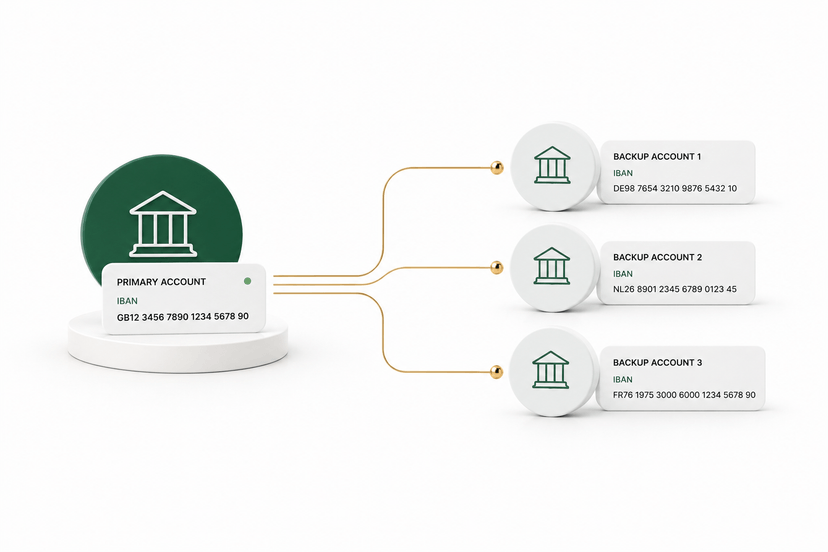
Banking redundancy is the practice of maintaining more than one banking relationship so your business can continue operating if one provider becomes unavailable or experiences disruptions.
Rather than depending on a single bank for all financial operations, businesses spread their banking activities across multiple providers. This approach reduces operational risk and ensures that critical business functions, such as receiving customer payments or paying suppliers, can continue even if one banking partner encounters issues.
For businesses operating internationally, banking redundancy has become an important part of risk management and business continuity planning.
Why International Businesses Need a Backup Banking Strategy
International businesses often process payments across different countries, currencies, and financial networks. Any disruption to these payment flows can affect customers, suppliers, and overall business operations.
A backup banking strategy helps businesses continue operating during unexpected situations such as:
Compliance Reviews
Banks regularly perform Know Your Business (KYB) and Anti-Money Laundering (AML) reviews. During these reviews, account activity may be delayed while additional information is verified.
Changes in Banking Policies
Financial institutions periodically update their internal policies or risk appetite. Certain industries, business models, or jurisdictions may no longer fit a provider's requirements.
Technical Outages
Like any technology platform, banking systems occasionally experience maintenance or unexpected outages that temporarily affect payment processing.
International Expansion
As businesses enter new markets, they may require additional banking capabilities, currencies, or payment methods that a single provider cannot offer.
Risks of Relying on One Banking Provider
Using only one banking partner can expose businesses to several risks.
Payment Delays
If your banking provider experiences an outage or operational issue, supplier payments and customer transactions may be delayed.
Business Interruptions
Limited account access can affect payroll, invoices, recurring payments, and other essential financial activities.
Cash Flow Challenges
Delays in receiving payments may impact working capital and day-to-day operations.
Customer Experience
Late payments or failed transactions can reduce customer confidence and damage business relationships.
Reduced Flexibility
A single provider may not support every currency, payment method, or international market your business requires.
Benefits of Banking Redundancy
Building a banking redundancy strategy offers several advantages.
Business Continuity
Alternative banking relationships help ensure your business can continue operating during unexpected disruptions.
Better International Coverage
Different providers often specialize in different payment networks, currencies, and regions, giving businesses greater flexibility.
Improved Operational Resilience
Reducing dependence on a single provider helps minimize operational risk.
More Payment Options
Multiple banking partners can provide access to additional payment methods and international banking services.
Support for Business Growth
A diversified banking setup makes it easier to expand into new markets without relying entirely on one financial institution.
Which Businesses Benefit Most?
Banking redundancy is valuable for businesses of all sizes, but it is especially beneficial for companies operating internationally.
Examples include:
- E-commerce businesses
- Import and export companies
- SaaS businesses
- Fintech companies
- Payment service providers (PSPs)
- Digital agencies
- International consultants
- Foreign-owned companies
- Businesses with customers in multiple countries
These businesses often depend on reliable international payment infrastructure to support daily operations.
How to Build a Banking Redundancy Strategy
Creating a backup banking strategy doesn't necessarily mean opening accounts with numerous providers. Instead, businesses should focus on reducing dependency on a single banking relationship.
Consider the following best practices:
- Maintain more than one business banking relationship.
- Diversify payment infrastructure where appropriate.
- Choose providers that support international payments and multiple currencies.
- Keep company documentation updated to simplify onboarding with additional providers.
- Review your banking setup regularly as your business grows.
- Develop contingency plans for payment disruptions.
Taking these steps can help improve resilience and reduce operational risk.
How EasyKonto Supports International Businesses
EasyKonto helps international businesses access modern banking solutions designed for companies operating across borders.
Eligible businesses can benefit from:
- Multi-currency business accounts
- International payment capabilities
- Virtual IBAN solutions
- Cross-border payment support
- Flexible banking solutions for international operations
By supporting businesses with modern financial infrastructure, EasyKonto helps companies build greater resilience as they expand globally.
Frequently Asked Questions
What is banking redundancy?
Banking redundancy means maintaining multiple banking relationships so your business can continue operating if one provider becomes unavailable.
Why is banking redundancy important?
It reduces operational risk by helping businesses maintain payment continuity during outages, compliance reviews, or policy changes.
Should small businesses have multiple banking partners?
Businesses that operate internationally or rely heavily on uninterrupted payment processing can benefit from maintaining more than one banking relationship.
Does banking redundancy reduce business risk?
Yes. Diversifying banking relationships helps reduce dependence on a single provider and improves overall business resilience.
How can EasyKonto support banking redundancy?
EasyKonto provides modern international banking solutions that help businesses manage cross-border payments, multiple currencies, and international financial operations more efficiently.
Final Thoughts
Unexpected banking disruptions can have a significant impact on international businesses. Whether caused by compliance reviews, technical outages, or policy changes, relying on a single banking provider creates unnecessary operational risk.
By implementing a banking redundancy strategy, businesses can improve payment continuity, strengthen financial resilience, and support long-term international growth with greater confidence.
Easykonto helps eligible businesses access modern banking solutions designed to support international operations, making it easier to build a more resilient banking strategy.